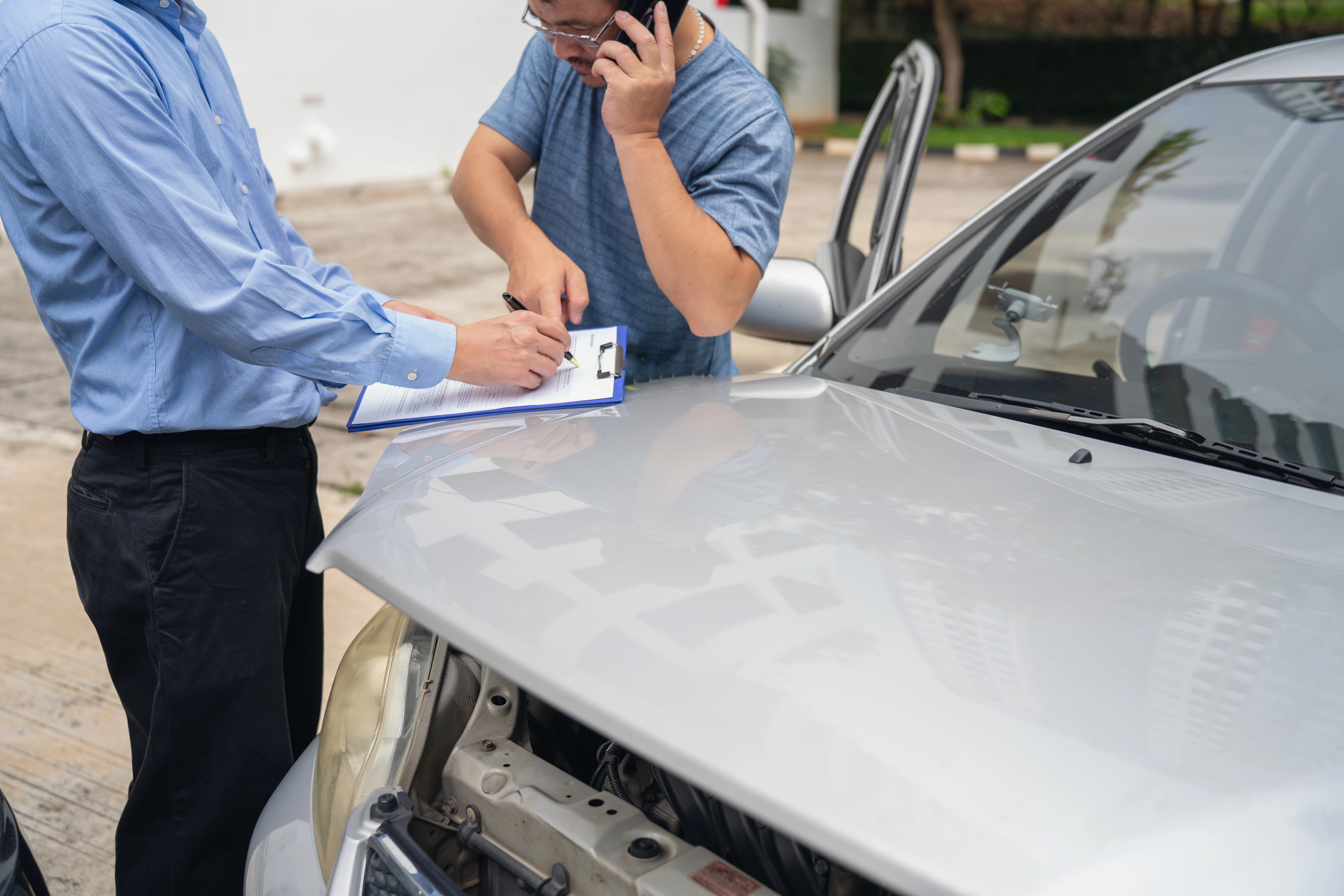
You opened the app, booked a ride, and trusted a stranger to get you where you needed to go. Then something went wrong — and now you’re sitting with a stack of medical bills, a body that hurts, and no clear answer to the most basic question of all: who is supposed to pay for this?
That question lands in our office constantly. Miami is one of the most active rideshare cities in the country — Uber’s weave through downtown traffic, zip across the causeway, and queue outside every hotel on South Beach. When one of them is involved in a crash, the people hurt often assume the answer is simple. It isn’t. Florida has a layered insurance system for rideshare accidents that depends on a single detail: what the driver was doing at the exact moment of impact. Get that detail wrong, and you could miss out on tens of thousands of dollars in coverage you were actually entitled to.
This article breaks down exactly how it works — the laws, the coverage amounts, who you can hold responsible, and what you need to do right now to protect your claim.
Florida’s No-Fault System: Your First Line of Coverage
Florida is one of a shrinking number of states that uses a no-fault auto insurance system. What that means in practice is this: after any car accident — whether you’re driving, riding, or walking and get hit — your own insurance pays your initial medical bills, not the at-fault driver’s. The legal vehicle for this is Personal Injury Protection, or PIP, which every Florida vehicle owner must carry under Fla. Stat. § 627.736. The minimum is $10,000.
PIP covers 80% of your reasonable medical expenses and 60% of lost wages, regardless of fault. It is meant to get money into your hands quickly so you can pay your doctors without waiting for a lawsuit to resolve. In practice, though, $10,000 disappears fast — sometimes after a single emergency room visit — and 80% coverage still leaves you on the hook for 20% of every bill. That gap is where things get complicated.
There are two things about PIP you need to burn into your memory:
The 14-Day Rule. Under § 627.736(1)(a), you must see a doctor within 14 days of the accident, or you lose PIP coverage entirely. No exceptions. It doesn’t matter that you felt okay at first, that you were busy, or that your symptoms seemed minor. The statute is absolute. Miss that window, and you’re paying your own medical bills out of pocket.
The Emergency Medical Condition distinction. If the doctor who sees you documents that you have an “emergency medical condition” (EMC) at your first visit, you have access to the full $10,000. If they don’t, your PIP benefit is capped at $2,500. This is another reason why seeing a qualified physician — not just urgent care — as soon as possible is so important. The difference between those two numbers can be the difference between covered treatment and a debt collector.
The Three Phases of Uber Coverage — and Why the Timing Changes Everything
Florida Statute § 627.748 governs Transportation Network Companies like Uber and Lyft. The law divides a driver’s activity into distinct phases and attaches different insurance requirements to each one. Which phase the driver was in when your accident happened is the single most important fact in your case.
| Phase | Coverage |
|---|---|
| Phase 1
App off |
Driver’s personal insurance only
If the driver wasn’t logged into the Uber app when the crash happened, Uber has no involvement. The driver is just a private motorist, and only their personal auto insurance applies. Florida’s bare minimum for personal policies is $10,000 in PIP and $10,000 in property damage liability — there is no mandatory bodily injury coverage. If a driver with minimum coverage seriously injures you, there may be very little money available. |
| Phase 2
App on, no passenger |
$50,000 / $100,000 / $25,000
Once a driver logs into the app and makes themselves available — even before they accept a single trip — Florida law requires significantly higher coverage. The minimums during this waiting phase are $50,000 bodily injury per person, $100,000 per accident, and $25,000 property damage. In practice, Uber’s own policy steps in because most personal auto policies specifically exclude rideshare activity. |
| Phase 3
Ride accepted through drop-off |
$1,000,000 primary liability
From the moment the driver accepts your trip request until the moment you step out of the vehicle, Florida law requires at least $1,000,000 in primary liability coverage for bodily injury and property damage. This is the coverage that protects you as a passenger, other drivers hit by the Uber, pedestrians, and cyclists. |
One practical note about Phases 2 and 3: Uber’s policies in Florida are currently underwritten by Progressive. When you make a claim, you’re dealing with that insurer — and they are not on your side. They are on Uber’s side. Their job is to pay as little as possible.
What If the Other Driver — Not Your Uber Driver — Caused the Crash?
Not every Uber accident is the Uber driver’s fault. Another driver might blow through a red light on Brickell Avenue and hit your Uber broadside. A drunk driver might sideswipe you on the way back from South Beach. In these situations, the legal path is different — and it has a serious weak point.
When a third party causes the crash, their bodily injury liability (BIL) insurance is supposed to compensate you for what PIP doesn’t cover. The problem is that Florida does not require drivers to carry bodily injury liability insurance. A significant number of Miami drivers carry only the state minimum — $10,000 PIP, $10,000 property damage — with no BIL coverage whatsoever. If the driver who hit you falls into that category, you could be facing serious injuries with no one to pay for them.
This is where uninsured and underinsured motorist coverage (UM/UIM) becomes your safety net. Under § 627.727, if you carry UM/UIM on your own personal auto policy, that coverage can apply even when you were a passenger in someone else’s vehicle. Florida law allows this “stacking” — your UM/UIM policy can layer on top of whatever Uber’s policy provides.
A word of caution about Uber’s own UM/UIM coverage: the statute permits TNCs to carry UM/UIM limits lower than their bodily injury liability limits, and Uber has historically taken advantage of that flexibility. Don’t assume Uber’s UM/UIM coverage will fully protect you if the at-fault driver was uninsured or underinsured. This is one of the areas where an attorney can make the biggest difference.
What If You Were Partly at Fault? Florida’s 51% Rule Explained
Florida shifted from a pure comparative fault system to a modified one when Governor DeSantis signed House Bill 837 into law on March 24, 2023. The change is codified in § 768.81, and it matters to every injury claim filed after that date.
Under the modified system, your compensation is reduced proportionally by your share of fault. If you’re found 20% at fault for the accident and your total damages are $100,000, you recover $80,000. That’s straightforward enough. The hard line comes at 51%.
Important: Under § 768.81(6), any party found 51% or more at fault for their own harm recovers nothing — not a dollar. A finding of exactly 50% still allows recovery (reduced by half). But cross that threshold by a single percentage point, and your entire claim is wiped out. Insurance adjusters are acutely aware of this rule. Expect them to look for every angle to push your fault above 50%.
This is not abstract. In Uber accident cases, adjusters commonly argue that a passenger failed to wear a seatbelt, was distracting the driver, or that a bystander somehow contributed to the accident. These arguments can shift fault percentages in ways that dramatically reduce—or even eliminate —your recovery. Having an attorney who actively counters those arguments with evidence is no longer optional under this framework. It’s essential.
What to Do After an Uber Accident in Miami
The choices you make in the first 24 to 48 hours after a crash shape everything that comes after. Here is what to do:
- Call 911. A police report creates an official record. It documents the location, the vehicles involved, and the circumstances — all of which you’ll need for your claim. Don’t skip this step even if the damage looks minor.
- Document the scene. Photograph the vehicles, road conditions, visible injuries, and any traffic signs or signals nearby. Screenshot the Uber app while your trip is still active — that timestamp proves the driver was on an active trip, which triggers the $1 million coverage.
- Gather everyone’s information. Get the Uber driver’s name, license number, insurance details, and plate number. Get the same from any other drivers involved. Collect names and contact information from witnesses before they leave.
- See a doctor — today, not tomorrow. Under § 627.736(1)(a), you have exactly 14 days to receive initial medical care or your PIP benefits are gone for good. Don’t wait to see if you feel worse. Tell the doctor everything that hurts, even if it seems minor — delayed-onset symptoms such as neck pain, headaches, and back injuries are common after crashes.
- Report the accident to Uber. Do this through the app. Uber requires drivers to report crashes, but you should also initiate your own report to make sure it’s on record.
- Contact your own insurance company. Even as a passenger, your PIP coverage may be primary. Let your insurer know what happened.
- Talk to an attorney before you talk to any insurance adjuster. Adjusters are trained to gather information that limits what they have to pay you. A recorded statement made before you fully understand your injuries or your rights can haunt your claim. Call us first.
Can You Sue for More Than Your Medical Bills?
PIP covers only medical expenses and a portion of lost wages. It doesn’t touch pain and suffering, permanent disability, or any of the ways a serious injury reshapes your life. To recover those damages, you have to step outside the no-fault system and file a lawsuit, which Florida allows, but only if your injuries meet the statutory threshold under § 627.737.
You can bring a lawsuit for pain, suffering, mental anguish, and inconvenience if your injury falls into one of these four categories:
Florida’s Tort Threshold — Fla. Stat. § 627.737
|
You need only one of these categories to qualify. Importantly, meeting the tort threshold is not tied to exhausting your PIP — you can pursue a liability lawsuit regardless of where your PIP claim stands, as long as your injuries qualify under § 627.737.
When a lawsuit is appropriate, the damages available go well beyond what PIP provides. You can seek compensation for all past and future medical costs, lost income and diminished earning capacity, pain and suffering, permanent disability or disfigurement, and loss of enjoyment of life. In an Uber accident, those claims can potentially be brought against the at-fault driver personally, against Uber’s $1 million liability policy, against another at-fault driver’s insurer, or against your own UM/UIM carrier if the at-fault driver was uninsured.
How Long Do You Have to File a Lawsuit?
Not as long as you might think. House Bill 837 cut Florida’s personal injury statute of limitations in half. Under § 95.11(4)(a), for any accident that occurred on or after March 24, 2023, you have two years from the date of the crash to file a lawsuit. Miss that deadline and the courts will not hear your case — no matter how strong it is, no matter how serious your injuries.
Two years can feel like a long time when you’re focused on recovering. It isn’t. Medical treatment, specialist appointments, negotiations with insurance companies, and the process of gathering evidence all eat into that window. We’ve seen people lose their right to sue not because their cases were weak, but because they waited too long. Don’t let that happen to you.
Key Takeaways
- Your own PIP insurance pays first — up to $10,000, covering 80% of medical bills — but only if you see a doctor within 14 days of the crash. Miss that window, and you lose PIP entirely. (§ 627.736)
- The coverage available depends entirely on the Uber driver’s phase: app off (personal insurance only), app on/no passenger ($50K/$100K/$25K), or active trip (Uber’s $1 million policy). (§ 627.748)
- If another driver caused the crash and has no bodily injury coverage, your own UM/UIM policy may be your primary safety net — and it can stack on top of Uber’s coverage. (§ 627.727)
- You can sue for pain and suffering if your injuries meet Florida’s tort threshold: permanent loss of a bodily function, permanent injury, significant scarring or disfigurement, or death. (§ 627.737)
- Florida’s modified comparative fault rule bars recovery when fault exceeds 51%. At exactly 50%, you can still recover, but only half as much. (§ 768.81)
- You have two years from the date of the accident to file a personal injury lawsuit for accidents on or after March 24, 2023. (§ 95.11(4)(a))
Frequently Asked Questions
I was a passenger in the Uber. Is Uber’s $1 million policy available to me?
Yes — if the driver had accepted your trip and you were in the vehicle, you were in Phase 3, and Uber’s $1 million primary liability coverage applies. Your own PIP pays first (up to $10,000). Once that’s exhausted, Uber’s policy can cover the remainder of compensable damages up to its limits. Whether you actually recover that amount depends on your specific injuries and how the claim is managed.
The Uber that hit me had no passenger. What coverage applies?
It depends entirely on whether the driver was logged into the app. If the app was active — even with no passenger assigned — the Phase 2 coverage applies: $50,000/$100,000/$25,000. If the app were completely off, you’re dealing only with the driver’s personal policy. Florida requires no minimum bodily injury liability for personal policies, so coverage may be very limited.
Can I sue Uber directly?
Uber classifies its drivers as independent contractors, which is a deliberate legal structure designed to shield the company from direct liability for a driver’s negligence. In most cases, your claim will run through Uber’s insurance policy rather than Uber as a defendant. There are limited circumstances where Uber’s own conduct — failure to screen a dangerous driver, for instance — could give rise to a direct claim, but these are fact-intensive and relatively rare.
I don’t own a car, so I don’t have PIP. What happens to my medical bills?
If you don’t own a registered vehicle in Florida, you aren’t legally required to carry PIP. Your medical bill coverage then depends on whether you were in an active Uber trip (Uber’s policy may cover you), whether the at-fault driver has bodily injury liability coverage, and whether you have private health insurance. It’s a more complicated picture, but it doesn’t mean you have no options.
How do I prove the Uber driver was on an active trip when the crash happened?
Uber stores digital trip data — GPS records, app activity logs, timestamps — that can establish exactly which phase the driver was in at the time of the accident. An attorney can send a legal preservation demand to Uber soon after the crash to ensure that data isn’t deleted under routine retention policies. The screenshot of your active trip on the Uber app at the scene is also valuable evidence to capture immediately.
What if I’m worried I was partially at fault for the accident?
Florida’s 51% bar means you lose all recovery if you’re found more than 50% at fault — but that percentage is not determined by what the insurance company says. It’s determined by evidence. Fault is argued, negotiated, and sometimes litigated. Don’t accept an adjuster’s fault assessment as final. We routinely challenge inflated fault assignments using accident reconstruction, eyewitness accounts, dashcam footage, and police reports. The question of whether you were 49% or 51% at fault can be worth the entire value of your case.
Hurt in a Miami Uber Accident? Let’s Talk.
The insurance rules around rideshare accidents are genuinely complicated — multiple policies, coverage gaps, and insurers who have every incentive to minimize what they pay you. You shouldn’t have to figure this out while you’re recovering from an injury.
At The Injury Claim Law Firm, we handle Uber and rideshare accident claims throughout Miami and South Florida. We’ll identify every applicable policy, preserve the evidence before it disappears, deal with the insurance companies, and fight for the full compensation you’re owed. You pay nothing unless we win.
Free Consultation: www.injuryclaimlawyer.com
No fees unless we recover compensation for you.
Note: This article is intended for informational purposes only. Our dedicated team compiles accident news reports using a variety of trusted external sources, such as local news outlets, official police reports, social media updates, and eyewitness statements regarding incidents in Florida. While we strive for accuracy, the facts in this post have not been independently verified by our writers. If you identify any inaccuracies, please contact Neufeld & Kleinfeld, PA, immediately, and we will promptly address any corrections. Posts can also be removed upon request.
Disclaimer: This post is not intended as a business solicitation. The information provided should not be interpreted as medical or legal advice. Additionally, the photo accompanying this post does not depict the accident scene described in this post.
Related Posts

How Florida’s No-Fault Insurance Affects Your Personal Injury...
You were not at fault. The other driver ran the light, hit your car, and...

What Florida Victims Should Know About Whiplash After...
You were sitting at a red light on Brickell Avenue, minding your own business, when...
Can You Sue for Soft Tissue Injuries After...
There is no cast, no crutches, and no dramatic X-ray to point to. From the...